The stack is getting denser
A modern vehicle computer runs several things at once. A rich operating system for the infotainment and driver-assistance side. A real-time environment for the safety-critical functions. Perception workloads on GPUs and neural accelerators. Lower-level controllers still running the deterministic loops that actually move the car.
Holding it all together is a hypervisor and a middleware layer that has to meet tight timing budgets under every condition a vehicle will ever see.
Each layer has a mature engineering community behind it. What's harder to find is the view across the whole stack. When a program slips, the root cause is usually a decision made early that rippled through everything downstream. A timing assumption at the silicon level turned out to be optimistic. A partition scheme that looked clean on paper did not survive contact with real workloads. A safety argument was built around an earlier version of the chip's behavior and had to be redone.
The chip integration capability gap
Most organizations have strong vehicle software engineers. They know the automotive domain, the safety standards, the validation discipline. Most also have access, through their silicon partners, to strong chip-level engineers who know the hardware intimately.
What's uncommon is the engineer who has done both. Someone who has stood up a new compute platform from the bootloader upward, made the hard calls on partitioning and middleware configuration, and then defended the resulting system in a safety review.
When those people are missing from a program, the integration work gets deferred until late in the schedule, and late is expensive.
What this means for program leaders
If you are running a vehicle software organization right now, you probably already feel this. The market for deep platform engineers is tight, and internal training, while necessary, takes years. Outside consultancies need several months to get up to speed and trained on your stack.
You need people who have done the specific work before, on comparable silicon, and who can plug into an internal team right away.
Hashlist as a solution
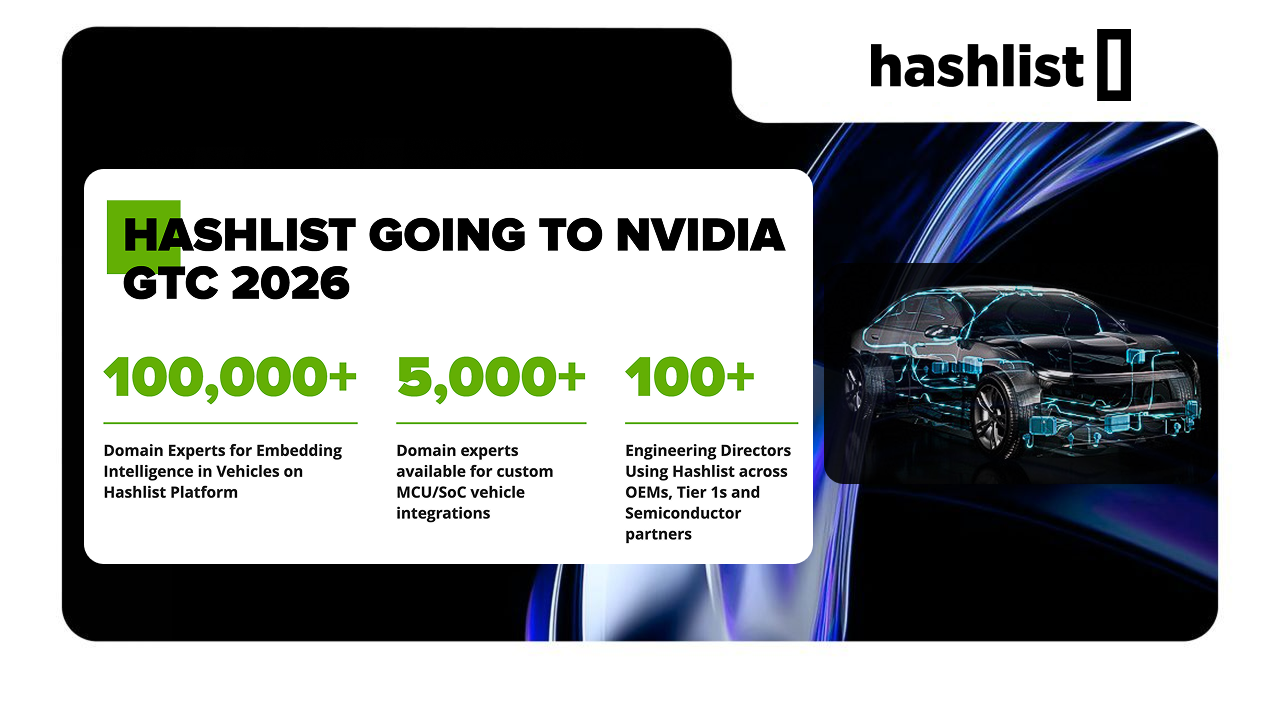
Hashlist is the world’s largest network of ultra-specific engineers across SoC/MCUs, core compute, base software, hypervisors, safety, and system architecture. Our engineers have shipped platforms at OEM and Tier-1 scale, and they work onsite alongside your teams rather than as a separate track.
A typical deployment happens in under two weeks. Engagements range from a single engineer joining a bring-up team to a full team covering the platform end to end. We handle sourcing, relocation, and contracting worldwide. We are available where you are: Onsite in your vehicle labs & offices.
The measure we care about is the one you care about: platforms that are ready when the vehicle is.
Read more about our engineer deployment platform here: https://www.hashlist.com/platform

.png)